Bulk Church T-Shirts With Custom Designs: A Complete Guide
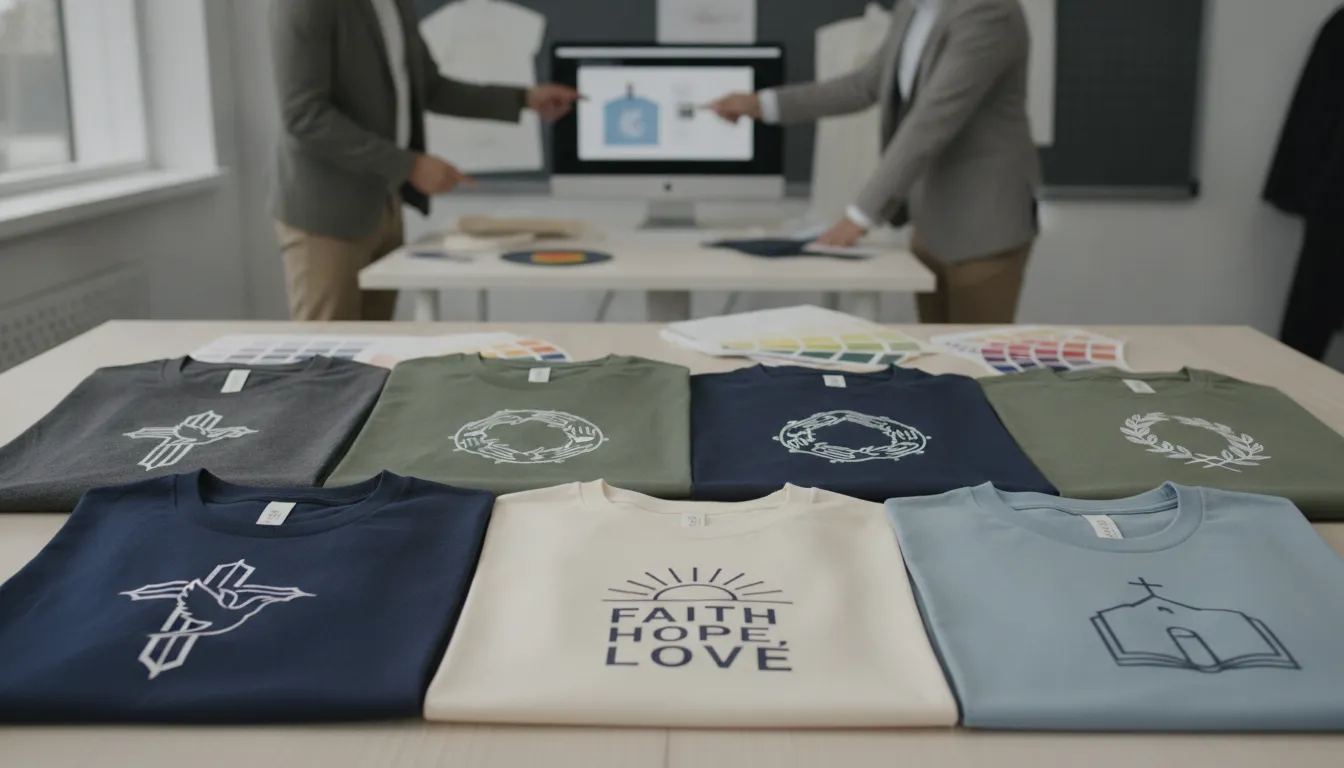
Ordering church T-shirts for a large group can feel straightforward until you start comparing sizes, fabrics, printing methods, artwork files, deadlines, and prices. Small details can affect the comfort, appearance, and total cost of the finished order. Bulk church t-shirts with custom designs offer plenty of flexibility, but that flexibility works best when your team has a clear plan. Whether you need shirts for a youth retreat, worship team, service project, fundraiser, or welcome campaign, the same core steps apply. You will learn how to choose practical garments, estimate quantities, review samples, set a fair price, and prepare for future orders.
Key Takeaways
- Start with a clear goal: Decide whether the shirts will identify volunteers, promote a ministry, support an event, welcome members, or raise funds.
- Review the full order before approval: Compare complete quotes, confirm garment quality and sizing, check minimums and delivery times, and proofread every design detail.
- Match fulfillment to demand: Choose bulk printing for planned group orders and print-on-demand for ongoing sales or uncertain demand. Track popular sizes, styles, and designs to guide future orders.
Why Order Bulk Church T-Shirts With Custom Designs?
Bulk church T-shirts do more than provide a coordinated outfit. They can help members feel connected, make volunteers easier to identify, and give your church a practical way to share its message outside Sunday services. A thoughtful design can represent a ministry, Scripture, outreach project, annual theme, or special event.
Ordering in bulk also gives your church more control over the finished product. You can select the shirt style, fabric, colors, sizes, and printing method while planning around a specific budget. If you sell the shirts, distribute them to volunteers, or give them to new members, custom apparel can support both community-building and fundraising goals.
Before ordering, decide what you want the shirts to accomplish. Will they help a team stand out, promote an event, raise money, or create a lasting reminder of a shared experience? A clear purpose will guide your design choices and help you order the right quantity.
Lower per-shirt costs
Ordering more shirts often lowers the price per garment. Screen printing is particularly cost-effective for larger orders because the initial setup cost is spread across more shirts. Information about custom shirts for churches and nonprofits notes that screen printing is often an economical choice for high-volume production.
Ask your printer for pricing at several quantity levels before placing the order. An additional dozen shirts may reduce the per-shirt cost enough to make extra inventory worthwhile. However, avoid ordering more than your church can reasonably use or sell. Compare the complete price, including setup, artwork, shipping, taxes, and personalization, rather than focusing only on the base shirt cost.
Unite members, volunteers, and staff
Matching shirts create a visible sense of connection. When members, volunteers, and staff wear the same design, they can feel like part of one team, even when they serve in different areas. Shirts also help newcomers identify the people who can answer questions or provide assistance during a busy service or event.
This can be especially useful during food drives, youth retreats, community days, and large gatherings. A church logo or team name makes volunteers easier to spot, while a welcoming design can help guests feel included. Church T-shirts can bring congregations together by giving people a shared visual identity they can wear with pride.
Share your church or ministry message
A custom shirt can carry your church’s message wherever the wearer goes. A short phrase, Scripture reference, ministry name, or recognizable logo may start conversations and help people remember your church after an event ends. Keep the wording concise, and choose imagery that reflects your church’s personality and values.
Think about what someone outside your congregation should understand at a glance. A youth ministry might choose an energetic graphic and short theme, while a missions team could use a simple logo with a service-focused message. Resources such as Real Thread’s guide to custom church shirts explain how personalized apparel can strengthen members’ connection to their church family.
Outfit youth, worship, and outreach teams
Different teams often need clothing that is comfortable, recognizable, and suited to their activities. Custom shirts can give youth groups a consistent look at retreats, help worship teams coordinate during services, and make outreach volunteers easy to identify in the community.
Consider ordering styles that match each group’s practical needs instead of giving every team the exact same garment. Performance fabric may suit outdoor service projects, while soft cotton can work well for casual youth events. Keep the overall design consistent with the same logo, colors, or theme across several shirt styles. This creates a unified appearance without overlooking comfort or function.
Support missions, events, and fundraisers
Church shirts can help raise money for missions, building projects, youth trips, food programs, and community outreach. Set a selling price that covers the complete order cost, then decide how much of each sale will support the ministry. Share that purpose clearly so buyers know how their purchase helps.
You can sell shirts through preorders, at church gatherings, during events, or through an online storefront. They can also serve as gifts for donors, volunteers, or mission participants. Custom apparel can support a shared mission by turning a gathering or fundraiser into something people can remember and continue talking about. Include the cause in your product description and promotional materials.
Reuse successful designs
A strong design does not have to disappear when one event ends. If the artwork represents your church, ministry, or annual theme rather than a single date, you can reuse it for future orders. This may reduce design work and make reorders easier when new members or volunteers join.
For example, leave the event date off a general outreach shirt, or create a core logo design that works across different garment colors. You can add a small seasonal detail when needed without rebuilding the entire design. Planning for reuse from the start can also help your church maintain a consistent visual identity across ministries, events, and future merchandise.
Which Customization Options Fit Your Church?
The best customization choices depend on how your church plans to use the shirts. A one-day service project may call for durable garments, simple artwork, and a cost-effective print method. Shirts for a worship team, retreat, or anniversary celebration may need softer fabric, coordinated colors, and a more polished design. Start with the purpose, audience, budget, and event date before choosing specific options.
Think about where and how people will wear the shirts after the event. Cotton may suit Sunday gatherings and small groups, while performance fabric can be more comfortable for outdoor projects. A front print may work for a simple ministry logo, but a back or sleeve design can help identify volunteers. If you plan to sell the shirts, consider which styles, colors, and sizes people are most likely to wear again.
Comfort and clarity should guide every decision. A shirt that looks impressive but feels uncomfortable may remain in a drawer. A soft, well-fitting shirt with tiny lettering may not communicate your message. Use the options below to create church shirts that look thoughtful, feel good, and serve a clear purpose.
Choose cotton, blends, polyester, or performance fabrics
Cotton is a popular choice for church t-shirts because it feels soft, breathable, and familiar. It works well for Sunday events, small groups, fundraisers, and casual volunteer shirts. Keep in mind that cotton can shrink and may hold moisture during outdoor activities.
Cotton-polyester blends offer a balance of softness, durability, and reduced shrinkage. Polyester and performance fabrics dry quickly and manage moisture, making them useful for mission trips, sports ministries, outdoor service projects, and summer events. Compare fabric quality, available brands, and garment styles, including short sleeve shirts, long sleeve shirts, and sweatshirts. This guide to comparing custom t-shirt printing sites can help you assess garment options before requesting quotes.
Compare fits, weights, colors, and sizes
Fit affects whether people feel comfortable wearing your church shirts after the event. Unisex shirts offer a straightforward option for mixed groups, while women’s cuts may provide a more shaped fit. Consider shirt weight, too. Lightweight garments suit warm-weather events, while heavier fabrics may work better for fall gatherings and hands-on volunteer projects.
Choose colors that support the artwork and suit the people wearing the shirts. Dark garments often work well with light ink, while bright shirts may need a simpler design for strong contrast. Order a few extras in common sizes, such as M, L, and XL, to prevent shortages. Offering unisex and women’s cuts can also improve comfort, as custom shirt guidance for church events recommends.
Coordinate adult, youth, women’s, and extended sizes
A church order may include toddlers, children, teenagers, adults, and people who need extended sizes. Ask your printer whether the same design can be produced across adult, youth, women’s, and extended-size garments. Some styles have different measurements, fabrics, or color choices, so confirm those details before collecting orders.
Create a size chart and share it with your congregation. Measurements are usually more reliable than labels because a medium from one brand may fit differently from a medium from another. If you are ordering for a smaller ministry or event, look for a vendor with a manageable minimum. For example, Real Thread’s church shirt service lists a minimum of 20 units.
Compare screen printing, DTG, DTF, and sublimation
The printing method affects price, appearance, durability, and the type of artwork you can use. Screen printing is often a practical choice for large orders with simple artwork and a limited number of ink colors. It produces a strong, familiar finish and can offer good value at higher quantities.
Direct-to-garment, or DTG, printing works well for detailed artwork on cotton shirts, especially when the design uses several colors. Direct-to-film, or DTF, printing offers flexibility across different garments and can suit smaller runs or complex graphics. Sublimation prints dye into polyester fabric, making it useful for bright, all-over designs and performance shirts. This printing method comparison explains how order size and design complexity can guide your choice.
Choose front, back, sleeve, or full-color printing
Front printing is the simplest option and works well for a church name, short verse, ministry logo, or event title. Back printing provides more space for a larger message, volunteer roles, event details, or a full illustration. A small sleeve print can add a church logo, year, or ministry identifier without competing with the main design.
Multiple print locations can make a shirt feel more complete, but they also add to the price. Full-color printing may suit detailed illustrations, photographs, or artwork with several shades. Before adding placements and colors, decide what people should notice first. Strong Christian t-shirt design guidance supports bold patterns and striking illustrations, but the artwork should still communicate one clear message.
Add names, dates, roles, and personal details
Personalization can make a standard church shirt feel connected to a specific group or moment. Add names to volunteer shirts, team roles to outreach apparel, or the event date to shirts created for a mission trip, retreat, or anniversary. You can also use different colors or small identifiers for children’s ministry, hospitality, worship, or setup teams.
Keep personalization consistent across the order. Decide whether names should appear on the front, back, or sleeve, and confirm every spelling before production. Individual names may require additional setup or handling, so ask for a complete price before approving the order. As church event shirt guidance notes, personalized shirts can turn a gathering into a visible shared mission.
Keep names, logos, verses, and graphics readable
A church shirt does not need to include every idea, verse, logo, and event detail. Choose one main message and make it easy to read from a reasonable distance. Use a font with clear letter shapes, strong contrast, and enough spacing between words. Avoid placing important text over a busy image or using thin lettering on a textured garment.
Check the design at its actual print size, not only on a large computer screen. A detailed graphic may lose clarity when reduced, and a long verse may need more space than expected. Church t-shirt design advice recommends choosing one message and setting it in type people can read across a parking lot. That test can help you remove clutter before ordering.
Confirm artwork, logo, and Scripture permissions
Before sending artwork to a printer, confirm that your church has permission to use every visual and written element. This includes stock images, illustrations, photographs, ministry logos, fonts, and artwork created by outside designers. If another organization owns the logo, ask for approval before adapting it for shirts.
Scripture can require extra care, too. Some Bible translations have usage guidelines for quoted text, especially when the wording appears on merchandise. Check the translation’s official policy and keep a record of any approval you receive. This custom church shirt guide also recommends confirming the rights to use logos and artwork before printing. Taking this step early can prevent reprints and production delays.
Review a digital proof before production
A digital proof shows how the final shirt should look, including the garment color, print placement, artwork, wording, and size. Review it carefully with the people responsible for the event or ministry. Check every name, date, Bible reference, logo detail, color, and punctuation. Confirm that the design is centered and scaled appropriately for each shirt style.
Choose one person to provide final approval so feedback stays organized. Ask whether the proof reflects the actual garment color and print method, and request a physical sample if the order is large or the design is especially important. Start four to six weeks before the event when possible. Planning guidance for custom church shirts recommends starting early, while a design template can help shorten the process when your deadline is tight.
How to Create a Complete T-Shirt Design Brief
A clear design brief gives your church, designer, and print provider one shared reference point. It reduces guesswork, keeps approvals organized, and helps ensure the finished shirts support the purpose of your event.
Before requesting artwork or a quote, gather the key details in one document. Include the event goal, message, visual direction, garment specifications, quantities, personalization needs, and deadlines. Specific instructions make it easier for a printer to recommend the right printing method and prepare an accurate quote.
Explain the event, ministry goal, audience, and theme
Start with the basics: event name, date, location, ministry goal, and intended audience. Explain whether the shirts are for a youth retreat, missions trip, worship conference, volunteer team, outreach program, fundraiser, or another church activity.
Then describe what you want the shirts to accomplish. They might help identify volunteers, create unity among attendees, share a message in the community, or raise money for a ministry project. Include the central theme, Bible verse, phrase, or idea that should guide the artwork.
It also helps to describe where people will wear the shirts. A design for outdoor outreach may need larger lettering and higher contrast than one intended for casual wear at church. When the message fits the audience and purpose, a custom shirt can remain useful long after the event ends.
Provide exact wording, colors, fonts, and placement
Write every word exactly as it should appear, including capitalization, punctuation, dates, names, Bible references, and Scripture translation. Do not expect the designer to interpret or correct your copy. Have someone proofread the text before sending the brief.
List your preferred colors using church brand names, color codes, or clear visual examples. Note whether the design should follow existing brand guidelines or use a separate event palette. Include font preferences too, such as bold sans serif, handwritten, traditional serif, or an approved church typeface.
Describe where each element should go. You might request a small logo on the left chest, a large event graphic on the back, and a short phrase on one sleeve. Prioritize readability, especially for text that needs to be seen across a room or parking lot. Simple graphics and bold fonts often print more clearly than crowded designs.
Share reference images, templates, brand guidelines, or past designs
Reference materials give the designer a clear visual starting point. Share shirts your church has liked, artwork from previous events, approved logos, color palettes, and images that reflect the tone you want. You can also include examples you dislike, along with a brief explanation of what should be avoided.
If you do not have finished artwork, ask whether your provider offers customizable design templates. Templates can help your team compare layouts, colors, and garment styles without developing every idea from scratch.
Include brand guidelines if your church has them. These may specify logo spacing, approved fonts, color codes, and rules for using the church or ministry name. Past designs can help maintain consistency, while new reference images can show how the upcoming shirt should look and feel.
Submit print-ready files in the vendor’s preferred format
Ask your print provider which file types it accepts before exporting your artwork. Many providers prefer vector files such as AI, EPS, or PDF because they can be resized without losing quality. Some also accept high-resolution PNG files with transparent backgrounds, depending on the printing method.
Confirm the required color mode, resolution, dimensions, and bleed settings. Keep the original editable file, then send a separate production file containing only the approved artwork. Use clear file names that identify the event, shirt color, placement, and version.
If the artwork includes text, your printer may ask you to convert the fonts to outlines. This helps prevent font substitutions during production. You may also need separate files for the front, back, sleeve, and personalized elements. For larger orders, screen printing is often a practical choice because it creates durable prints at higher quantities.
Specify styles, cuts, colors, sizes, and quantities
List each garment you are considering, including fabric, weight, fit, color, and style. State whether you want unisex, women’s, youth, athletic, or extended-size options. If you plan to use several styles, separate the quantity for each one.
Create a size breakdown instead of providing only a total number. Use records from previous events, collect preferences through a preorder, or ask ministry leaders for an estimate. Ordering a few extras in common sizes, such as M, L, and XL, can help cover late requests and exchanges.
Separate quantities by purpose too. For example, identify shirts for volunteers, staff, giveaways, fundraising sales, and reserve inventory. If you are offering multiple garment colors, list the quantity for each color. This gives the provider enough information to confirm availability and calculate your pricing accurately.
Identify personalization needs and design versions
State whether shirts need individual names, team roles, group names, numbers, or other details. Explain which artwork stays the same and which parts change. For example, every shirt may use the same event design, while volunteer shirts include a role printed on the sleeve.
Personalization can affect pricing, file preparation, production time, and minimum order requirements. Ask how the provider wants variable information submitted. You may need to provide a spreadsheet with one row per shirt, including the exact spelling of each name and role.
List every design version in the brief, such as attendee, volunteer, speaker, youth, and staff shirts. Give each version a clear name, then include its garment color, placement, quantity, and personalization details. This helps prevent similar files from being mixed up during production.
Set approval deadlines and choose one decision-maker
Work backward from the date the shirts need to arrive. Set deadlines for submitting artwork, reviewing the first proof, requesting revisions, approving the final file, placing the order, and receiving the shipment. Starting the conversation four to six weeks before the event leaves more time for design changes and production delays, as Sunday Cool’s planning guidance recommends.
Choose one person to communicate final decisions to the designer or printer. That person can collect feedback from pastors, ministry leaders, volunteers, and event organizers, then send one organized response. This prevents conflicting instructions from reaching the provider.
Include the decision-maker’s name, email address, and phone number in the brief. Also state who has authority to approve the final proof and the date approval must be complete. A simple approval process helps keep the order on schedule.
Combine feedback before requesting revisions
Send the same proof to every reviewer and collect comments in one shared document or email thread. Give the group a specific review period, such as two business days. Ask reviewers to check the wording, colors, layout, logo use, Scripture reference, garment color, and sizing details.
Combine all comments into one revision list before sending it to the designer. Separate required corrections from optional preferences, and identify the exact location of each change. For example, “increase the back text size” gives clearer direction than “make it stand out more.”
Limit the number of people who can request changes. Too many separate opinions can make a straightforward design difficult to finish. Once the team agrees on the revision list, send it in one message and request an updated proof. Before approving the artwork, ask someone who was not involved in every design discussion to check spelling, placement, colors, and missing details.
How Much Do Bulk Church T-Shirts Cost?
The cost of bulk church t-shirts depends on more than the number of shirts in your order. Your total may include the garments, printing, artwork preparation, personalization, shipping, taxes, and rush services. A low price per shirt can look appealing, but it may not offer the best value if the shirts are uncomfortable or the final invoice includes unexpected fees.
Start by setting a total budget and a target cost per shirt. Then request itemized quotes from several providers using the same shirt style, quantity, design, and delivery date. If you plan to sell the shirts, leave enough room between your total cost and selling price to support your church, ministry, mission, or event.
Compare volume discounts and quantity breaks
Most custom t-shirt providers offer lower per-shirt prices as order quantities increase. Screen printing can be cost-effective for large orders because the setup cost is spread across many garments, while the printing cost per shirt stays relatively low. Reviewing bulk pricing and quantity breaks can help you identify the point where your order receives the best rate.
Ask for quotes at several quantities, such as 50, 100, 250, and 500 shirts. Ordering slightly more may reduce the price per shirt, but the lowest rate is not always the smartest choice. If you order too many, unsold shirts can cost more than the discount saves. Estimate attendance, collect preorders, and add only a modest number of extras for popular sizes.
Consider shirt quality, fabric, fit, and style
The shirt itself affects both your budget and how often people wear it. Basic cotton garments typically cost less, while ringspun cotton, cotton blends, heavyweight shirts, and performance fabrics may have higher prices. Think about the setting before choosing a style. A breathable performance shirt may suit an outdoor volunteer event, while soft cotton may work better for a youth group or casual church apparel.
Comfort matters when people will wear the shirts for several hours. A stiff, heavy, or scratchy garment may be worn once and left in a drawer. Sunday Cool’s advice on church fundraising shirts highlights the value of choosing retail-quality shirts that feel good enough to wear again. Spending a little more on fabric and fit can make the order more useful.
Factor in print method, ink colors, and locations
Your print method, design complexity, and number of print locations all affect the final price. A small, one-color front print usually costs less than a large full-color graphic printed on the front, back, and sleeves. With screen printing, additional ink colors can also increase setup and production costs.
Screen printing often suits bold graphics with a limited color palette and larger quantities. DTG and DTF can work well for detailed, full-color designs, while sublimation is commonly used for certain polyester garments. Printing method comparisons can help you weigh appearance, durability, and production needs. Ask how your provider prices extra colors, print locations, oversized artwork, and specialty inks before approving the design.
Check setup, artwork, digitization, and revision fees
Some providers include artwork preparation in the quoted price, while others charge separate fees. These may cover logo cleanup, color separation, file conversion, or digitization for a production process that requires a specialized file. You may also pay for design revisions if your artwork needs changes after the first proof.
Ask for a written list of included services before placing the order. Find out whether the provider accepts your file type, how many proof revisions are included, and whether edits after approval cost extra. Reviewing base prices, setup fees, discounts, and lead times gives you a more accurate picture of the total cost.
Include personalization and multiple design versions
Names, roles, team labels, and other personal details can make shirts more useful, but they often add production time and labor. One shared design is usually simpler and less expensive than separate versions for staff, volunteers, youth groups, worship teams, and outreach leaders.
Ask whether personalization is priced per shirt, per design, or as a separate service. Confirm that the provider can manage different names, roles, sizes, and quantities in one order. If you expect high attendance, add a few extra shirts in common sizes, especially medium, large, and extra large. This can prevent last-minute shortages, a practical point also noted by Custom Tees Now.
Add shipping, tax, handling, and rush fees
Shipping can change the final total, especially when you order hundreds of shirts or need delivery by a specific date. Compare standard and expedited options, and check whether shipping is charged as one order or divided across multiple packages. Some providers also add handling fees, sales tax, residential delivery charges, or rush production fees.
Ask when the shirts will leave the production facility, not only when they are expected to arrive. Production time and transit time are separate parts of the schedule. Shipping costs can vary according to order size and delivery method, so include them in your budget before choosing a quantity or selling price.
Compare complete quotes, not base prices
A base price can make one provider appear less expensive, but it may exclude artwork, setup, extra print locations, shipping, or taxes. Request an itemized quote that lists the garment brand and style, colors, size quantities, print method, print locations, personalization, fees, and estimated delivery date.
Use the same specifications when requesting quotes. This gives you a fair comparison instead of placing a basic shirt beside a premium garment with more services included. Check the quote for minimum order requirements, payment terms, proof approval deadlines, and reprint policies. Following the recommendation to compare complete quotes rather than advertised prices can help prevent surprises on the final invoice.
Set a fundraising price that covers costs and supports your ministry
If your church plans to sell the shirts, calculate the full cost of each one before choosing a retail price. Include the garment, printing, artwork, packaging, payment processing, shipping supplies, and any shirts you plan to give away. Divide the complete project cost by the number of shirts you realistically expect to sell, not only the number you order.
Then decide how much each sale should contribute to the ministry, mission, event, or outreach goal. Keep the price reasonable for your audience, but avoid setting it so low that the campaign earns little or loses money. Tell buyers what the proceeds support. Fundraising shirt guidance also recommends covering production costs while directing a meaningful share of sales toward the ministry.
What Minimums and Timelines Should You Expect?
Ordering custom church t-shirts involves more than choosing a design and entering a quantity. Each printer sets its own rules for minimum order quantities, garment options, artwork, personalization, and production schedules. Confirm these details before collecting payments or announcing a final price to your congregation.
Your timeline also depends on whether you place one bulk order or use print-on-demand fulfillment. Bulk printing can reduce the per-shirt cost when you order for a large group, while print on demand lets you purchase shirts as needed. The best option depends on your event date, expected demand, budget, and plans for future reorders.
Check minimums by design, garment, color, and print method
Ask whether the minimum order applies to the entire purchase or to each design, garment color, and print location. A printer may accept 50 shirts total but require 12 shirts for every separate design or color combination. A children’s version, volunteer shirt, or alternate garment color could count as a separate order.
The printing method may affect the minimum, too. Screen printing often suits larger orders with a limited number of ink colors. Direct-to-garment, direct-to-film, and print-on-demand options may offer more flexibility for smaller batches. Compare the requirements with your design and expected quantity before choosing a vendor. Reviewing bulk printing costs can help you spot fees that may not appear in the base price.
Confirm whether you can mix sizes, colors, and styles
Most church orders include a range of sizes, but that does not always mean you can mix every garment option freely. Confirm whether small through 3XL sizes count toward the same minimum, and ask whether extended sizes cost more. Some printers also apply separate minimums to youth and adult garments.
Color flexibility matters, too. You may be able to combine several shirt colors under one design, or the printer may require a separate setup for each color. Ask whether you can mix crewnecks, fitted shirts, tanks, or performance styles in one order. Getting these details in writing helps you set accurate expectations and avoid unexpected charges when the order is finalized.
Ask about names, roles, and multiple-design restrictions
Personalized shirts can work well for pastors, worship leaders, volunteers, and outreach teams, but names and roles may change the price and production process. Ask whether each name requires an additional fee, whether there is a minimum number of personalized shirts, and whether names can appear in different locations.
Also confirm how many design versions the quoted price includes. A main event shirt, volunteer shirt, and youth shirt may require separate artwork approval or setup fees. Send the vendor a complete list of versions, names, titles, and placements before production begins. This gives the printer a clear scope and reduces the risk of a missing name, incorrect role, or unapproved design variation.
Calculate quantities with a practical size breakdown
Start with your attendee list, volunteer count, or preorder totals. Then divide the order across sizes using real information whenever possible. If your church has ordered shirts before, review that history. If not, ask members to submit their sizes during registration or collect responses through a simple online form.
Add a modest cushion for late sign-ups, exchanges, and guests who were not included in the original count. Many church event planners order about 10% to 15% extra, and church t-shirts can support event promotion after the initial distribution. Avoid ordering too many extras if the design includes a specific event date, since that detail may limit future use.
Use preorders to estimate demand and limit excess inventory
Preorders give you a clearer picture of demand before you commit to a large quantity. Share a mockup, list the available sizes, set a payment deadline, and explain when shirts will be ready. You can collect orders after services, during small groups, at registration tables, or through an online storefront.
Consider ordering a few additional shirts beyond the preorder total for exchanges, volunteers, and last-minute buyers. Preorders are especially helpful for a first event because they reduce guesswork and help you set a fundraising price based on actual interest. Start the conversation several weeks before the event so your team has time to review sizes, collect payments, and resolve incomplete orders. Advance planning is also important for church fundraising shirt campaigns.
Compare bulk orders with print-on-demand fulfillment
A bulk order usually makes sense when you know how many shirts you need and want them available at the same time. Screen printing is often practical for larger church groups because it produces durable, vibrant designs at competitive quantities. It works especially well for simple logos, event names, and artwork with a few solid colors.
Print on demand may suit your church when demand is uncertain or when you plan to sell the design throughout the year. Shirts are produced after each order, so you do not need to store a large inventory. The per-shirt cost may be higher, and delivery can take longer, but the model reduces leftover stock. A POD storefront can support ongoing sales for missions, youth programs, and recurring outreach events without requiring another large order.
Start designing six to eight weeks before the event
Begin the design process six to eight weeks before your kickoff, retreat, mission trip, or fundraiser. This gives your team time to choose the garment, develop the artwork, gather feedback, and confirm the budget. It also leaves room to adjust the design if the first version does not print clearly at the intended size.
Set an internal deadline for final artwork and assign one person to provide approval. Too many separate opinions can slow the process, especially when changes arrive through different emails or messages. Give the printer the exact wording, color choices, sizes, quantities, and personalization details together. A clear custom t-shirt design process makes the order easier to review and schedule.
Order three to four weeks ahead when possible
Place the order at least three to four weeks before you need the shirts, especially for a large group or an important event. This window allows time for production, shipping, inspection, and corrections. It also gives you room to respond if a garment becomes unavailable or a size needs to change before approval.
Busy seasons can affect turnaround times, so ask the vendor for a realistic delivery date instead of relying on a general estimate. If your event is on a Sunday, plan to have the shirts in hand several days earlier. Your team can then sort packages by size, identify missing items, and prepare orders for pickup or distribution without rushing.
Separate production from shipping time
A quoted turnaround time may cover printing only. Shipping is often calculated separately, and the delivery estimate may begin after the order is approved, not when you first submit your artwork. Ask when production starts, how long it takes, and whether weekends or holidays count toward the estimate.
Request the shipping method and tracking information before placing the order. If the shirts are traveling across the country or crossing a border, allow additional time for carrier delays and customs processing. For a fixed event date, choose a delivery window that ends several days before the shirts are needed. Scheduling arrival for the final possible day leaves little room to correct a damaged package or missing size.
Plan for revisions, rush options, reorders, and delivery buffers
Build time into your schedule for artwork revisions and proof approval. Check every word, date, logo, Scripture reference, shirt color, and placement before giving final approval. After production begins, changes may be impossible or may require an additional charge.
Ask about rush production before you need it. Find out whether rush fees apply to printing, shipping, or both, and whether the vendor guarantees a delivery date. If you expect ongoing sales, ask how quickly you can reorder the same design and whether the original artwork setup will be saved. For recurring ministries, print-on-demand fulfillment can simplify reorders. For a one-time event, ordering a small number of extras can provide a useful buffer for exchanges, late registrations, and unexpected demand.
How Can You Check T-Shirt Quality?
A low price does not always mean good value. A shirt that feels uncomfortable, shrinks after one wash, or arrives with a blurry design can leave your church with unhappy members and unsold inventory. Before placing a bulk order, evaluate both the garment and the printing quality.
Start by requesting product details, a sample, and a complete quote. If you use print-on-demand (POD) fulfillment, order a sample before listing the shirt for sale. This lets you check the product your customers will actually receive, rather than relying only on a digital mockup.
Quality also includes practical details, such as accurate sizes, reliable delivery, clear care instructions, and a fair resolution process if something goes wrong. Keep your approved artwork, quote, proof, and order confirmation in one place. These records make it easier to compare the finished order with what you approved.
A careful review may take extra time, but it can prevent costly mistakes across dozens or hundreds of shirts. It also helps you choose products people will wear regularly, recommend to others, and reorder for future events.
Evaluate comfort, weight, fit, shrinkage, and durability
Start with the shirt, not the design. Check the fabric composition, weight, softness, stretch, neckline, seams, and overall fit. Cotton often feels familiar and breathable, while polyester and performance blends may suit outdoor events, sports ministries, or volunteer teams. Blended fabrics can offer a balance of comfort, shape retention, and easy care.
Order a sample in at least one common size before purchasing in bulk. Try it on, inspect the stitching, and wash it according to the care label. Note whether it twists, shrinks, pills, fades, or loses its shape. As Sunday Cool explains, a shirt that feels stiff, heavy, or scratchy may only be worn once, even when the design looks appealing.
Review print sharpness, color, coverage, and texture
Inspect the artwork up close and from several feet away. Text should have clean edges, small details should remain visible, and colors should look consistent throughout the design. Look for gaps, pinholes, uneven coverage, cracking, or ink extending beyond the artwork.
The print should suit the fabric and shirt color. A large, heavy print may feel stiff on a lightweight shirt, while a thin print may lose impact on a dark garment. Water-based ink absorbs into the fabric for a softer, more breathable finish. Other methods may provide brighter colors or better results for detailed artwork. Sunday Cool’s printing guide explains how ink type affects the feel and wash performance of a shirt.
Request a blank or printed physical sample
A digital mockup shows general placement and appearance, but it cannot tell you how the shirt feels or whether the printed colors meet your expectations. Request a blank sample when you are evaluating the garment. Choose a printed sample when artwork, ink coverage, or placement is especially important.
Use the sample to check the actual shirt color, print scale, sleeve length, neckline, and size. Photograph it in natural light and compare it with the approved design. Ask whether the sample cost can be credited toward the final order. For larger events, consider ordering extra medium, large, and extra-large shirts. Inspire & Unite recommends keeping additional common sizes available to help prevent last-minute shortages.
Check wash resistance and care instructions
Wash the sample before approving the full order. Follow the supplier’s instructions, then inspect the print for fading, cracking, peeling, bleeding, or changes in texture. Check the garment for shrinkage and compare its measurements with the original size. Taking photos before and after washing gives you a clear basis for comparison.
Ask which printing method suits your artwork, fabric, and order size. Screen printing often works well for simple, bold designs and larger runs, while DTG, DTF, and sublimation may suit other fabrics or detailed artwork. Tee Vision Printing notes that screen printing is widely used for vibrant, durable prints on bulk church orders. Share practical care instructions with anyone who receives or purchases a shirt.
Review portfolios, ratings, communication, and delivery records
Look beyond polished product photos. Review the supplier’s portfolio for designs similar to yours, including large lettering, detailed logos, dark garments, and multi-color artwork. Customer photos can show how shirts look outside a studio setting. Ratings are useful, but read written reviews for repeated comments about sizing, print quality, packaging, and delivery.
Pay attention to communication before placing an order. A dependable supplier should answer questions clearly, explain limitations, and confirm each stage of production. Ask how orders are tracked and how long production and shipping usually take. Customer reviews, such as those collected on Ministry Gear’s Trustpilot profile, can offer insight into how products hold up after purchase.
Verify placement, spelling, shirt colors, and quantities
Before approving production, compare the final proof with your design brief. Check every word, Bible reference, date, logo detail, and punctuation mark. Confirm that the design is centered, printed at the intended size, and placed on the correct side of the shirt. Ask someone who did not create the design to proofread it, since a fresh review can catch mistakes more easily.
Verify the garment color and quantity for every size. Make sure youth, adult, women’s, and extended sizes appear correctly, and ask whether the supplier will pack them separately. The design should remain readable from a reasonable distance. Heart and Hook recommends using one clear message, readable type, and enough contrast between the shirt and ink colors.
Confirm correction, replacement, return, and refund policies
Find out what happens if the supplier makes an error. The policy should explain how to report incorrect spelling, damaged garments, wrong sizes, missing items, poor print quality, or late delivery. Ask whether you need photos, how quickly you must report the issue, and whether the company offers a replacement, refund, credit, or reprint.
Do not rely on a verbal promise. Save the written policy, approved proof, final quote, order confirmation, and delivery estimate. Check whether customized products qualify for returns, since personalized items often follow different rules from standard products. A clear guarantee, such as the accuracy, quality, and delivery assurance described by Underground Shirts, can make the ordering process more predictable.
Choose clear quotes, proofs, and production updates
A dependable supplier should provide more than a base price. Your quote should list the garment style, colors, sizes, quantities, print locations, decoration method, setup charges, personalization fees, shipping, taxes, and rush costs. Confirm whether revisions, extra proofs, or artwork adjustments carry additional fees.
Ask when you will receive the digital proof, when production begins, and how tracking information will be shared. Set one internal approval deadline and assign one person to provide final approval. This keeps feedback organized and prevents conflicting requests. Build in time for corrections and shipping delays. Tee Vision Printing advises beginning the design process six to eight weeks before an event and placing the order at least three to four weeks ahead when possible.
How to Order, Sell, and Reorder Church T-Shirts
A successful church T-shirt order starts with a clear plan. Decide whether the shirts are for an event, volunteer team, fundraiser, welcome gift, or ongoing ministry store. Then set the budget, deadline, quantity, design, and fulfillment method before contacting a printer.
Bulk printing works well when you need many shirts at once. Print-on-demand fulfillment may be a better option when you want to sell shirts throughout the year without storing inventory. Whichever method you choose, plan how members will order, how payments will be collected, and how shirts will be distributed.
Set the purpose, budget, deadline, quantity, and size mix
Begin by writing down what the shirts need to accomplish. Shirts for a youth retreat may need a different style and design from shirts for a Sunday welcome team or a fundraising campaign. Your purpose will guide the garment, artwork, quantity, and selling price.
Set a delivery deadline and maximum budget before requesting quotes. Estimate the quantity using registration numbers, volunteer lists, expected attendance, or sales from similar events. Build a practical size mix instead of ordering equal quantities of every size. Medium, large, and extra-large often sell quickly, but your church’s past orders provide the most reliable data.
Order a few extra shirts in common sizes to cover late sign-ups, exchanges, and walk-in sales. Offering unisex and women’s cuts can also give members more comfortable options, as this guide to church shirt orders recommends.
Collect orders at services, gatherings, or online
Give members a convenient way to place orders. A sign-up sheet may work for a small congregation, while an online form can simplify larger orders or include members who cannot attend services. List the design, garment color, available sizes, price, payment method, and final order date.
For online orders, ask buyers to review the size chart before submitting payment. Explain whether shirts will be shipped, held for pickup, or distributed at a service or event. A confirmation email or receipt can help prevent mistakes with names, sizes, and payments.
For event shirts, compare confirmed orders with expected attendance. Ordering about 10% to 15% more than the registered attendance can cover late sign-ups and provide extras for promotion, according to this church event T-shirt guide. Keep one central order record, even if people submit requests through several channels.
Submit artwork, approve the proof, and confirm the quote
Send the printer the final artwork along with the exact wording, shirt colors, print locations, sizes, and quantities. Review every church name, ministry title, Bible verse, date, and phone number before submission. A small spelling error can affect the entire order.
Request a digital proof that shows how the design will look on the selected garment. Check the print size, placement, colors, text, and personalization. Choose one person to gather feedback and approve the proof. This keeps revisions organized and prevents the printer from receiving conflicting instructions.
Ask whether the quote includes setup, artwork, digitization, personalization, shipping, taxes, and rush charges. Approve the proof only after all details are correct. Starting six to eight weeks before the event and ordering three to four weeks ahead can allow time for revisions and delivery, as noted in this event shirt production guide.
Choose bulk inventory for immediate distribution or sales
Bulk inventory is a practical choice when you know the approximate quantity and need shirts at the same time. It suits retreats, conferences, mission trips, volunteer teams, and fundraisers with a fixed event date. You can distribute the shirts in advance, include them in registration packages, or sell them from a table.
Screen printing is often a strong choice for larger orders because it offers durable, vibrant designs at bulk-friendly prices. It works particularly well when every shirt carries the same artwork and the design uses a limited number of ink colors.
Create a simple inventory plan before the shipment arrives. Sort shirts by size, label the boxes, and assign someone to manage pickup or sales. Keep a small reserve for exchanges and unexpected demand. If you plan to sell the shirts, calculate the price from the complete cost, including printing, packaging, payment processing, and shipping.
Use print-on-demand for ongoing orders
Print-on-demand can work well when demand is difficult to predict or when you want to keep a church design available year-round. The shirt is printed after a customer places an order, so your church does not need to purchase or store a large batch in advance.
This model can support ministry apparel, seasonal campaigns, outreach projects, and online sales for members who live outside the local area. The provider typically handles printing and shipping, which reduces the administrative work for staff and volunteers. It also limits the risk of leftover inventory.
Before choosing a provider, review its garment catalog, printing methods, production times, shipping rates, return policy, and customer support. Screen printing or direct-to-garment printing may suit standard cotton shirts, while sublimation can work well for some performance fabrics, as this printing method comparison explains. Order a sample so you can check the fit, fabric, and print quality first.
Sell shirts at events, through outreach, and for fundraising
Church T-shirts can help people identify one another at gatherings while creating an additional source of ministry funding. Set up a simple sales area at conferences, community days, youth events, and fundraisers. Display one sample of each design and clearly list the available sizes, prices, and payment options.
For outreach, connect the shirt to a specific service project, community initiative, or ministry campaign. Keep the design easy to read from a distance, and include only the information people need. A useful, comfortable shirt may continue sharing the church’s message long after the event.
For fundraising, explain what the proceeds support. Buyers are more likely to participate when they know whether their purchase helps fund missions, youth programs, food assistance, or another church project. You can also use custom shirts for nonprofit events to create a shared identity around the cause.
Offer shirts as welcome gifts or volunteer recognition
A T-shirt can make a useful welcome gift for new members, youth participants, event attendees, or mission trip volunteers. Choose a comfortable style that people will want to wear after the first gathering. Ask for sizes during registration, and keep a few common sizes available for late additions.
Shirts can also recognize the people who support your ministries. Give them to worship team members, children’s ministry volunteers, outreach leaders, event coordinators, or long-serving staff. A role, year, or small personalization can make the gift feel more meaningful, as long as it does not make the main design difficult to read.
Consider how the shirts fit with the rest of the event experience. Matching apparel, name badges, signs, and promotional materials can create a consistent look without making the gathering feel overly formal. Guidance on custom church shirts also highlights the value of coordinated promotional items.
Inspect shipments before distributing or selling them
Open the shipment as soon as it arrives. Count the boxes and compare the contents with your order confirmation. Check the shirt colors, sizes, garment styles, print locations, spelling, and quantities before distributing anything.
Inspect several shirts from different boxes and sizes rather than checking only the item on top. Look for blurry edges, missing details, uneven coverage, misplaced artwork, and unexpected color changes. If the order includes names or roles, compare them with the original list.
Photograph any problems and contact the supplier promptly. Keep the packaging, invoice, and other paperwork until the issue is resolved. Approved proofs and written production updates can make corrections easier. Reviews of church merchandise quality also show why print finish and durability deserve attention before shirts reach members.
Track popular designs, sizes, and colors for reorders
Keep a record of every sale and distribution. Track the design, garment style, color, size, quantity, date, and event connected to each order. This information will show which products people want instead of leaving you to rely on memory.
Note which sizes sell first and which colors remain in storage. If large and extra-large shirts sell quickly while smaller sizes remain, adjust the next size breakdown. Record preferences for garment fit, fabric, print placement, and design style as well.
Save the final artwork, approved proof, supplier details, garment style, and original quantities in one folder. Reusing a successful design can simplify a reorder, but check that the date, event name, logo, and price still apply. If demand is uncertain, test interest with a preorder or print-on-demand store before committing to another bulk order.
Related Articles
- How Can Churches Use T-Shirts to Promote Events?
- Custom Shirts for Church & Nonprofit Events: Inspire & Unite
- Custom Church Shirts Guide
- Designing Christian T-Shirts: Tips for Creating Faith-Filled Designs
- Comparing Online Custom T-Shirt Printing Sites for Bulk Orders: Pricing and Shipping Insights
Frequently Asked Questions
What is the best printing option for bulk church T-shirts? Screen printing often works well for larger orders with a simple design and a few ink colors. DTG or DTF may be a better fit for detailed, full-color artwork or smaller quantities. Sublimation is useful for certain polyester garments and bright all-over designs. Compare the artwork, fabric, quantity, and budget before choosing a method.
How many church T-shirts should we order? Use attendance numbers, volunteer lists, or preorder data to estimate demand. Add a small reserve for late registrations, exchanges, and popular sizes, especially medium, large, and extra-large. If the design includes a specific date, avoid ordering excessive extras. Print-on-demand can reduce leftover inventory when demand is uncertain.
How far in advance should we order custom church shirts? Start planning six to eight weeks before the event. Aim to approve artwork and place the order at least three to four weeks before the shirts are needed. This allows time for revisions, production, shipping, and corrections. Schedule delivery several days before the event rather than relying on the final possible arrival date.
How can we make sure the shirts are comfortable and high quality? Request a blank or printed sample before committing to a large order. Check the fabric, fit, stitching, print clarity, color, and sizing. Wash the sample according to its care instructions to see whether it shrinks, fades, cracks, or changes shape. A sample also helps you confirm that the design is readable at its actual print size.
Can a church sell custom T-shirts without storing inventory? Yes. A print-on-demand storefront can produce and ship each shirt after someone places an order. This approach works well for ongoing ministry apparel, online sales, and fundraisers with unpredictable demand. Bulk printing may offer a lower per-shirt cost when you need many garments at once, so compare both options using your expected sales and complete expenses.